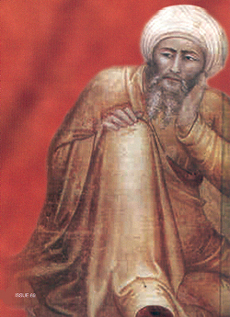
Thursday, June 26, 2008

Pensée grecque, culture arabe

par Dimitri Gutas

J'ai eu l'occasion de relire ce livre que j'avais lu en 1998 en anglais (Greek Thought, Arabic Culture) et qui m'avait fait bonne impression à l'époque. C'est une heureuse surprise qu'il soit finalement sorti en français (en 2005, soit il y a environ deux ans) car même si, à force, j'ai pris l'habitude de lire en anglais tout ce qui existe sur le domaine gréco-arabe (soyons honnête, plutôt tout ce que j'arrive à trouver), c'est agréable de lire dans sa langue.

Commençons par le commencement. Badawi, dans son livre La transmission de la philosophie grecque au monde arabe (qui a connu deux éditions successives: 1968 et 1987, il est édité chez Vrin et en dépit de toutes les inexactitudes qu'il contient, c'est un classique en français, Richard Walzer dit que c'est le livre le plus étrange qu'il ait lu sur le sujet, je ne lui donne pas tort ), n'hésitait pas à dire: "On s'intéressait à Aristote par pure curiosité scientifique, pour l'amour de la science désintéressée. Voilà ce qui rehausse la valeur de l'entreprise du calife al Ma'mûn, comparée à celle de ses prédécesseurs à partir d'Abu Ja'afar al Mansûr qui ne s'intéressait qu'aux sciences utiles: médecine, astronomie et mathématiques". C'était une opinion largement répandue que les arabes s'étaient intéressé à la philosophie grecque par amour du savoir (on invoquait par exemple à l'appui de cette thèse le fameux hadith qui demande au croyant d'aller chercher le savoir jusqu'en Chine s'il le faut). Or, évidement, si une telle thèse pouvait paraître séduisant car idéalisant le monde arabe médiéval (littéraire, cultivé, ouvert à toutes les traditions et les autres religions), elle ne résiste pas longtemps à ce soupçon que forcément, il devait y avoir un intérêt quelque part là dessous. Encore fallait-il le montrer.

C'est chose faite avec cet ouvrage de Dimitri Gutas qui explore justement les facteurs qui ont joué un rôle majeur dans le mouvement des traductions gréco-arabes. On retiendra particulièrement la démonstration que le bayt al hikma (la fameuse "maison de la sagesse" de Bagdad ) n'est pas cette bibliothèque mythique où les chrétiens, les juifs et les musulmans traduisaient tous les textes du savoir grec (lesquels, justement s'y seraient trouvés). Par une relecture scrupuleuse d'Ibn Nadim (entre autres), Gutas montre qu'aucun élément sérieux dans les textes ne vient étayer le mythe de ce bayt al hikma qui avec le recul semble plus de l'ordre de la propagande abbasside qu'autre chose (laquelle propagande obéissait à une logique chez al Ma'mun et al Mansûr contrairement à ce que disait Badawi dans la citation donnée plus haut). Le pouvoir abbasside a certes favorisé le mouvement de traduction gréco-arabe nous explique Gutas mais c'est pour des raisons politiques: d'abord pour s'attirer le soutien du monde sassanide zoroastrien (al Ma'mûn) puis en réaction au monde byzantin qui rejetait l'héritage grec au profit du christianisme, le calife al Mansûr a misé sur le philhéllénisme. Si le bayt al hikma n'était pas une bibliothèque contenant tous les livres et les manuscrits grecs, syriaques et ses traductions arabes, cela a pour conséquence importante que les traductions faites durant le début de l'ère abbbassides étaient dues à des commandes privées. C'est par exemple les médecins du calife qui seraient ainsi à l'origine réelle des traductions d'Hippocrate et de Galien. Soucieux de rester à un bon niveau de science, ces médecins auraient payé des traducteurs syriaques pour avoir accès aux oeuvres des médecins grecs.

Un éclairage intéressant est rapporté par Gutas: dans la mesure où les traductions étaient le fait de commandes privées, les traducteurs traduisaient le texte non sans le rectifier au passage selon le destinataire de la commande. On a ainsi l'exemple de la Théologie d'Aristote (en fait texte qui correspond aux trois dernières Ennéades de Plotin) où Dieu et les anges apparaissent, se substituant aux dieux traditionnels grecs. Une fois les traductions faites dans la langue arabe, les arabes purent constituer leur philosophie et leur science, ce qui explique non pas un déclin mais un arrêt progressif et quasi complet des traductions faites. Dernière chose: le tableau des pages 273 à 276 récapitule la liste de textes byzantins recopiés en minuscule grecque et il est instructif car il correspond aux textes traduits en arabe, ce qui montre que le monde byzantin n'était pas, contrairement à une idée reçue, fermé au monde arabe et qu'au contraire pour des raisons financières évidentes, il s'était de nouveau intéressé aux manuscrits grecs qu'il possédait.

Voilà, j'espère avoir fait un compte rendu fidèle de l'ouvrage de Gutas qui mérite d'être lu pour comprendre pourquoi et comment Bagdad entre le 8ème et le 10ème siècle a été au coeur d'un mouvement de transmission a priori improbable entre le monde grec et le monde arabe.

Averroes : Incoherence of the Incoherence

Ibn Rochd
TAHAFUT AL TAHAFUT
Translated from arabic with introduction and notes
By Simon Van Den Bergh


TABLE OF CONTENTS

VOLUME (I)


Preface


INTRODUCTION
THE FIRST DISCUSSION Concerning the Eternity of the World
THE FIRST PROOF
THE SECOND PROOF
THE THIRD PROOF
THE FOURTH PROOF


THE SECOND DISCUSSION: The Refutation of their Theory of the Incorruptibility of the World and of Time and Motion

THE THIRD DISCUSSION: The demonstration of their confusion in saying that God is the agent and the maker of the world and that the world in His product and act, and the demonstration that these expressions are in their system only metaphors without any real sense

THE FOURTH DISCUSSION: Showing that they are unable to prone the existence of a creator of the world

THE FIFTH DISCUSSION: To show their incapacity to prove God’s unity and the impossibility of two necessary existents both without a cause

THE SIXTH DISCUSSION: To refute their denial of attributes

THE SEVENTH DISCUSSION: To refute their claim that nothing cars share with the First its genus and be differentiated from it through a specific difference, and that with respect to its intellect the division into genus and specific difference cannot be applied to it

THE EIGHTH DISCUSSION: To refute their theory that the existence of the First is simple, namely that it is pure existence and that its existence stands in relation to no quiddity and to no essence, but stands to necessary existence as do other beings to their quiddity

THE NINTH DISCUSSION: To refute their proof that the First is incorporeal

THE TENTH DISCUSSION: To prove their incapacity to demonstrate that the world has a creator and a cause, and that in fact they are forced to admit atheism

THE ELEVENTH DISCUSSION: To show the incapacity of those philosophers who believe that the First knows other things besides its own self and that it knows the genera and the species in a universal way, to prone that this is so

THE TWELFTH DISCUSSION: About the impotence of the philosophers to prone that Cod knows Himself

THE THIRTEENTH DISCUSSION: To refute those who arm that Gad is ignorant of the individual things which are divided in time into present, past, and future

THE FOURTEENTH DISCUSSION: To refute their proof that heaven is an animal mowing in a circle in obedience to God

THE FIFTEENTH DISCUSSION: To refute the theory of the philosophers about the aim which moves heaven

THE SIXTEENTH DISCUSSION: To refute the philosophical theory that the souls of the heavens observe all the particular events of this world


ABOUT THE NATURAL SCIENCES


THE FIRST DISCUSSION: The denial of a logical necessity between cause and effect

THE SECOND DISCUSSION: The impotence of the philosophers to show by demonstrative proof that the soul is a spiritual substance

THE THIRD DISCUSSION: Refutation of the philosophers’ proof for the immortality of the soul

THE FOURTH DISCUSSION: Concerning the philosophers’ denial of bodily resurrection
<>

APPENDIX: Changes proposed in the Arabic Text 365

INDEX of Proper Names 374


VOLUME (II)

NOTES 1

Index of Proper Names mentioned in the Introduction and in the Notes 207

Index of Subject/ mentioned in the Notes 211

Some contradictions in Aristotle’s System 215

Arabic-Greek Index to the Notes 216

Greek-Arabic Index to the Notes 218

Entire text in one big file (1.4 Megs) (click the other mouse key and select save as to down load entire file locally)


Published and distributed by the trustees of
"E.J.W GIB MEMORIAL”
E-text conversion, Muhammad Hozien.

Wednesday, June 25, 2008

Al-Ghazali : Incoherence of the Philosophers

Tahafut al-Falasifa
Abu Hamid al-Ghazali (1058-1111 CE)
Translated into English from Urdu by Sabih Ahmad Kamali


Table of Contents:


Introduction

I - Refutation of the philosophers' belief in the Eternity of the world

II - Refutation of their belief in the everlasting nature of the world, time and motion

III - Of their dishonesty in saying that God is the agent and the maker of the world which is His action or product: and the explanation of the fact that these words have only a metaphorical, not real, significance to them>

IV - To show their inability to prove the existence of the creator of the world

V - Of their inability to prove by rational arguments that God is one, and that it is not possible to suppose two necessary beings each of which is uncaused

VI - Refutation of their denial of the Divine Attributes

VII - Refutation of their thesis that it is impossible that something should share a genus with God, being separated from Him by differentia; and that the intellectual division into genus and differentia is inapplicable to Him

VIII - Refutation of their thesis that God's is simple being — i.e., it is pure being, without an essence to which existence would be related — and that necessary existence is to Him what essence is to any other being

IX - Of their inability to prove by rational arguments that God is not body

X - Of their inability to prove by rational arguments that there is a cause or creator of the world

XI - Refutation of those philosophers who hold that God knows the Other, and that He knows the species and genera in a universal manner

XII - To show their inability to prove that God knows Himself either

XIII - Refutation of their doctrine that God (may He be exalted above what they say) does not know the particulars which are divisible in accordance with the division of time into 'will be,' 'was,' and 'is'

XIV - To show their inability to prove that the heaven is living, and obeys God through its rotary motion
XV - Refutation of what they consider to be the purpose which moves the heaven

XVI - Refutation of their theory that the souls of the heavens are aware of all the particulars which originate in the world

XVII - Refutation of their belief in the impossibility of a departure from the natural course of events

XVIII - Of their inability to give a rational demonstration of their theory that the human soul is a spiritual substance which exists in itself; is not space-filling; is not body, or impressed upon body; and is neither connected nor disconnected with body — as God is neither inside the world nor outside it, or as the angels are

XIX - Refutation of their thesis that, having come into being, the human souls cannot be destroyed; and that their everlasting nature makes it impossible for us to conceive of their destruction

XX - Refutation of their denial of the resurrection of bodies


Conclusion

Tuesday, June 24, 2008

Averroes: Books


Averroes's Middle Commentary on Aristotle's Poetics:


This volume contains a translation into English of Averroes's Middle Commentary on Aristotle's Poetics, an introduction to the translation in which the arguments of both Averroes and Aristotle are sketch out and their differences from Plato and other important thinkers explored, an outline analysis of the order of Averroes's commentary, annotations to the text, a bibliography, and a glossary of important terms with their English translations.

Aristotle's Poetics has held the attention of scholars and authors through the ages, and Averroes has long been known as "the commentator" on Aristotle. His Middle Commentary on Aristotle's Poetics is important because of its striking content. Here, an author steeped in Aristotle's thought and highly familiar with an entirely different poetical tradition shows in careful detail what is commendable about Greek poetics and commendable as well as blameworthy about Arabic poetics.

Heretofore, non-Arabic readers have had to depend upon Hermannus Alemannus's Latin translation of Averroes's Middle Commentary or on its English version. Both are inadequate. They incorrectly render Averroes's various arguments and make his beautiful poetic citations read like doggerel. Moreover, they provide inaccurate and incomplete information about the sources of those citations and consequently portray Averroes's text as a curious compilation of relics from some exotic but not very learned horde.

The present translation is based on a sound, critical Arabic edition prepared by the translator. Not only is it the first English translation from the Arabic original, but also the first translation of the Arabic text into any language other than medieval Hebrew or Latin. The translation is literal and eloquent, albeit more literal when eloquent when sense demands such a sacrifice. Throughout the commentary, the same English word is used for the same Arabic word unless an exception is noted. The renditions of the poetic citations are somewhat freer without reaching to unwarranted innovations.

Questions leading to a more accurate grasp of Averroes's argument are explored in the introduction, and the basic themes of his interpretation of Aristotle are laid bare. Thus, Butterworth takes issue with many of the prevalent beliefs about medieval Arabic poetics and explores the philosophical contention that poetry belongs to the art of logic. In doing so, he also points to the way that position allows both Averroes and Aristotle to revise Plato's attack on poetry and the significance of their revision.


The Decisive Treatise & Epistle Dedicatory:

Tran. by Charles E. Butterworth.

Averroës (Ibn Rushd, 1126-1198) emerged from an eminent family in Muslim Spain to become the first and last great Aristotelian of the classical Islamic world; his meticulous commentaries influenced Christian thinkers and earned him favorable mention (and a relatively pleasant fate) in Dante's Divina Commedia. The Book of the Decisive Treatise was and remains one his most important works and one of history's best defenses of the legitimate role of reason in a community of faith. The text presents itself as a plea before a tribunal in which the divinely revealed Law of Islam is the sole authority; Averroës, critical of the anti-philosophical tone of the Islamic establishment, argues that the Law not only permits but also mandates the study of philosophy and syllogistic or logical reasoning, defending earlier Muslim philosophers and dismissing criticisms of them as more harmful to the Islamic community than the philosophers' own views had been. As he details the three fundamental methods the Law uses to aid people of varied capacities and temperaments, Averroës reveals a carefully formed and remarkably argued conception of the boundaries and uses of faith and reason.

The Book of the Decisive Treatise, Determining the Connection Between the Law and Wisdom & Epistle Dedicatory.

THE BOOK OF THE DECISIVE TREATISE, DETERMINING THE CONNECTION BETWEEN THE LAW AND WISDOM

". . . The Law makes it obligatory to reflect upon existing things by means of the intellect, and to consider them; and consideration is nothing more than inferring and drawing out the unknown from the known . . ."

"You ought to know that what is intended by the Law is only to teach true science and true practice. True science is cognizance of God (may He be blessed and exalted) and of all the existing things as they are, especially the venerable ones among them; and cognizance of happiness in the hereafter and of misery in the hereafter. True practice is to follow the actions that promote happiness and to avoid the actions that promote misery; and cognizance of these actions is what is called 'practical science.'

". . . The link between the physician and the health of bodies is [the same as] the link between the Lawgiver and the health of souls . . ."
This health is what is called 'piety.'

". . . Injuries from a friend are graver than injuries from an enemy – I mean that wisdom is the companion of the Law and its milk sister. So injuries from those linked to it are the gravest injuries – apart from the enmity, hatred, and quarreling they bring about between both of them. These two are companions by nature and lovers by essence and instinct."

EPISTLE DEDICATORY:

". . . Existence is the cause and reason of our knowledge, while eternal knowledge is the cause and reason of existence."


Biographies

Philosophes et Penseurs d'Andalous:
* Ibn Rushd (Averroes) (1126–1198)
* Ibn Tufail (1105–1185)
* Ibn Khaldun (1332-1406)
* Maimonides (1138-1204)
* Al-Tutili (?-1126)
* Ibn Abd Rabbih (860-940)
* Abou Madyane (1126-1198)
* Al Mutamid Ibn Abbad (1040-1095)
* Abu Abdullah al-Bakri (1014-1094)
* Ibn al-Kattani (951-1029)
* Ibn al-Khatib (1313-1374)
* Abu al-Qasim (936-1014)
* Abu Ishaq al-Shatibi (?-1388)
* Ibn al-Yayyab (1274-1349)
* Ibn Amira (1186-1251/1259)
* Ibn Ammar (c.1031–c.1086)
* Ibn Arabî (1165-1240)
* Ibn Bajjah (Avempace) (?-1138)
* Ibn Baqi (-1145 or 1150)
* Moses ibn Ezra (c.1058-c.1138)
* Salomon ibn Gabirol (1021-1058)
* Ibn Hazm (994-1064)
* Ibn Jubayr (1145-1217)
* Ibn Juzayy (1321-1357)
* Ibn Khafaja (1058-1138/9)
* Al-Fath ibn Khaqan (-1134)
* Ibn Sahl of Sevilla (1212-1251)
* Ibn Said al-Maghribi (1213-1286)
* Ibn Quzman (1078-1160)
* Ibn Zaydun (1003-1071)
* Ibn Zamrak (1333-1394)

Philosophes et Penseurs du Maroc:
* Léon l'Africain (1488-1554)
* Mohammed Akensous (-1877)
* Idriss al-Amraoui (-1879)
* Muhammad al-Arabi al-Darqaoui (1760-1823)
* Ibn al-Banna al-Marrakushi (1256-1321)
* Mohammed al-Baydhaq (c.1150)
* Nur Ed-Din Al Betrugi (-1204)
* Abou Hassan al-Chadhili (1196-1258)
* Abd al-Rahman al-Fasi (1631-1685)
* Isaac Alfasi (1013-1103)
* Abd al-Aziz al-Fishtali (1549-1621)
* Mohammed al-Harraq (1772-1845)
* Sulayman al-Hawwat (1747-1816)
* Mohamed al-Idrisi (1099-1165)
* Mohammed al-Ifrani (1670-1745)
* Muhammad al-Jazuli (?-1465)
* Abdelwahid al-Marrakushi (1185-?))
* Ahmed Mohammed al-Maqqari (c. 1591-1632)
* Ahmad ibn Khalid al-Nasiri (1835-1897)
* Ahmad Ibn al-Qadi (1553-1616)
* Muhammad al-Qadiri (1712-1773)
* Mohammed ibn Amr al-Ribati (?-1827)
* Ibn Abbad al-Rundi (1333-1390)
* Salih ben Sharif al-Rundi (1204-1285)
* Al-Suhayli (1114-1185)
* Abu Ali al-Hassan al-Yusi (1631-1691)
* Abu al-Qasim al-Zayyani (1734-1833)
* Muhammad Awzal (1670-1749)
* Abdeslam Ben Mchich (1140-1227)
* Ayyad ben Moussa (1083-1149)
* Abderrahman El Majdoub (-1569)
* Edmond Amran El Maleh (1917– ?)
* David Hassine (1722-1792)
* Ibn Abi Zar (?-1315)
* Ahmad ibn Ajiba (1746-1809)
* Ismail ibn al-Ahmar (1387-1406)
* Muhammad Ibn al-Habib (1876-1972)
* Ahmad Ibn al-Qadi (1553-1616)
* Ibn al-Wannan (?-1773)
* Ibn Bajjah (?-1138)
* Ibn Battuta (1304–1377)
* Ibn Hirzihim (-1164)
* Ahmad Ibn Idris al-Fasi (1760-1837)
* Ibn Juzayy (1321-1357)
* Mohammed ibn Tumart (c.1080-1130)
* Ibn Zaydan (1873-1946)
* Muhammad al-Muqri (1851-1957)
* Abi Mohammed Salih (1153-1234)
* Ibn Abi Zar (?-1315)
* Ahmad Zarruq (1442-1493)

Averroès: la Religion et la Science

Cité dans P.Guichard,
L’Espagne et la Sicile musulmanes aux XIe et XIIe siècles.
Lyon, PUF, 1990

Le Coran et la science :
Un hadîth du Prophète rapporte : "Recherche la science, même en Chine".
L’islam est dès le début très ouvert à la science. La quête du savoir fait partie des préceptes du Coran. Entre le VIIIe et le XIIe siècle, une somme considérable de recherches et de découvertes fut effectuée dans les universités islamiques. La bibliothèque du calife à Cordoue contient 400 000 volumes ; le philosophe Averroès (1126-1198) y enseigne ; on y transmet la science grecque, indienne, persane. Les sciences arabes s’élaborent à partir de la traduction systématique des grands traités grecs de philosophie, mathématique, astronomie, physique, chimie, médecine, pharmacologie, géographie, agronomie. Des œuvres persanes et des ouvrages indiens de mathématiques et d’astronomie sont également recueillis. Les savants enrichissent alors tout cet héritage par des observations, des expériences, des innovations, en particulier dans le domaine des mathématiques (création d’une nouvelle arithmétique, développement de la géométrie et de la trigonométrie, invention de l’algèbre). De nouveaux traités de médecine (de Rhazès à Avicenne), de géographie, d’astronomie sont écrits et circulent en Occident, grâce aux "plaques tournantes du savoir" que sont l’Espagne et la Sicile.

L'entrevue au palais :
l'attitude des chefs religieux à l’égard de la science
récit, rapporté par un chroniqueur arabe, met en scène une entrevue entre Averroès et le sultan almohade, Abu Ya’qub Yusuf. Averroès, philosophe, médecin et savant du XIIe siècle est une figure emblématique de la science en pays d’islam. Auteur d’une véritable somme philosophique, son objectif est de concilier la foi révélée et le savoir du grand philosophe grec Aristote. Pour lui, chaque croyant doit acquérir une connaissance rationnelle lui permettant d’interpréter le Coran dans son sens à la fois figuré et littéral et d’accéder ainsi à la double compréhension d’une même vérité qui est la Parole de Dieu.

"Lorsque je fus en présence de l’Emir des Croyants, Abû Ya’qûb, je le trouvais seul avec Abû Bakr Ibn Tufayl. Ce dernier commença à faire mon éloge, mentionnant ma famille et mes ancêtres, et incluant dans son exposé des faits supérieurs à mes propres mérites. Après m’avoir demandé le nom de mon père et ma généalogie, la première chose que me dit l’émir des Croyants fut : "Que pensent-ils du ciel ? – en se référant aux philosophes – est-il éternel ou créé ?". La confusion et la crainte s’emparèrent de moi, et je commençai à inventer des échappatoires et à nier que la philosophie m’ait jamais intéressé, car je ne savais pas ce qu’Ibn Tufayl lui avait dit à mon sujet. Mais l’Emir des Croyants, comprenant ma crainte et ma confusion, commença à commenter ce qu’il m’avait demandé, mentionnant ce qu’avaient dit Aristote, Platon et tous les philosophes, et présentant en outre les objections des penseurs musulmans contre eux ; je me rendis compte qu’il avait une mémoire (et connaissance) telle que je n’aurais pas cru que l’on puisse en trouver, même chez ceux qui se consacrent exclusivement à ce thème. Il poursuivit en me tranquillisant de cette façon jusqu’à ce que je parle et me mis à exposer ce que je pensais de la question ; et lorsque je me retirai, il ordonna qu’on me fasse don d’une somme d’argent, de vêtements d’apparat et d’un coursier."


Averroès dialogue avec Porphyre


Monfredo de Monte Imperiali, Liber de herbis.
Manuscrit sur parchemin (35 x 25 cm). Italie, 1re moitié du XIVe siècle.
BNF, Manuscrits (Latin 6823 fol. 2)
Monfredi de Monte Imperiale imagine une conversation entre Averroès (XIIe siècle) et le philosophe néoplatonicien Porphyre (IIIe-IVe siècles)